Rapid-Trigger 60% Magnetic Switch Keyboard for FPS Control
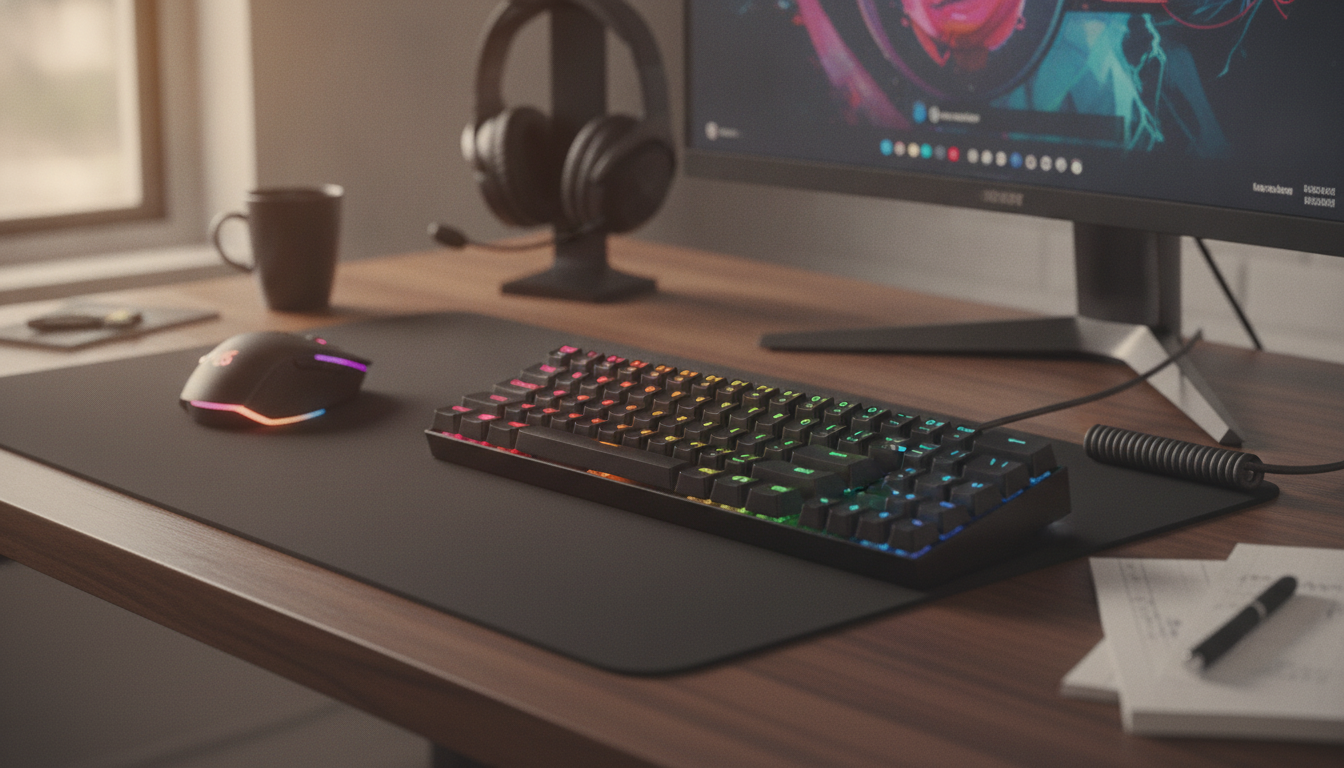
Rapid-Trigger 60% Magnetic-Switch Keyboard for Fast Competitive Play
Rapid-trigger magnetic-switch keyboards are built for players who want faster key resets, cleaner counter-strafes, and tighter control in high-speed games. This compact 60% model puts the focus where it matters most for competitive play: quick actuation behavior, efficient use of desk space, and a simplified layout that fits tournament-style setups without unnecessary bulk.
What Makes Magnetic Switches Different
Traditional mechanical switches rely on physical contact points to register a keypress. Magnetic (Hall effect) switches take a different approach: they measure key travel using a sensor and a magnet, which means input is read by position rather than by metal-on-metal contact. (For a plain-language overview of the underlying concept, see the Hall effect sensor reference.)
This sensing method can help maintain consistent input behavior over time because it’s not dependent on contact wear in the same way. Just as importantly for gaming, actuation can be tied directly to travel distance—so the “when it triggers” point can be tuned instead of being fixed around a single mechanical event. When paired with rapid-trigger behavior, the keyboard can reset based on movement direction, which can reduce the delay between repeated inputs and make quick tap patterns feel more immediate.
Many magnetic boards also support software-based configuration (where supported), enabling per-key actuation distance, reset behavior, and profiles for different games.
Why Rapid Trigger Helps in Games
Rapid trigger is most noticeable in situations where you’re repeatedly tapping or feathering keys instead of fully releasing them every time. In fast shooters, that can translate into sharper movement adjustments—especially when you’re stopping and starting quickly to keep accuracy tight.
- Faster re-presses: Keys can re-register sooner during partial releases, useful for rapid strafing and micro-corrections.
- More controlled movement: Small travel changes can produce immediate stop-start adjustments in many FPS titles.
- Improved rhythm consistency: Repeated taps can feel more uniform because reset behavior is based on travel rather than a fixed mechanical reset point.
- Best suited for: Competitive FPS, rhythm games, and any scenario where quick key cycling matters more than full-travel typing feel.
It’s not a magic “play better” switch, but it can reduce the friction between intent and input when a game rewards tight timing—especially in repeated micro-inputs rather than long holds.
60% Layout: Space Savings vs. Convenience
A 60% layout strips the keyboard down to the essentials, typically removing the function row, dedicated arrow keys, and a navigation cluster. For competitive setups, that smaller footprint can be a feature rather than a compromise.
- More mouse room: The smaller footprint helps keep the mouse closer to your centerline and reduces shoulder reach during wide sweeps.
- Portability: Easier to move between desks, LANs, or events, and fits compact setups with limited surface area.
- Trade-offs: Arrow keys, F-keys, and navigation controls are usually accessed through layered shortcuts (Fn combos).
- Who it fits: Players who prioritize mouse space and minimalism over dedicated productivity keys.
If your daily workflow depends on heavy spreadsheet navigation or dedicated arrows, a 60% board can still work—but expect a learning curve as you build muscle memory for layers.
Quick Specs Snapshot
Here’s a quick, play-focused view of what matters on a rapid-trigger 60% magnetic-switch board.
| Feature | What it means for play |
|---|---|
| Magnetic (Hall effect) switches | Sensing based on key travel rather than electrical contact |
| Rapid-trigger behavior | Quicker reset for repeated taps and faster directional changes |
| 60% layout | More desk space for mouse movement; relies on layers for extra keys |
| Gaming-focused use | Best for fast-paced inputs and frequent re-press actions |
For compatibility context, most gaming keyboards present themselves as standard USB input devices; the USB Human Interface Device (HID) standard is the common baseline that helps keyboards work across modern operating systems without special drivers.
Setup Tips for Better Results
Rapid-trigger and adjustable actuation can feel incredibly responsive—but dialing settings too aggressively can backfire if you’re not used to it. A few practical tweaks can help you get the benefits without the frustration.
Who This Keyboard Is For (and Who Should Skip It)
Product Options Available Now
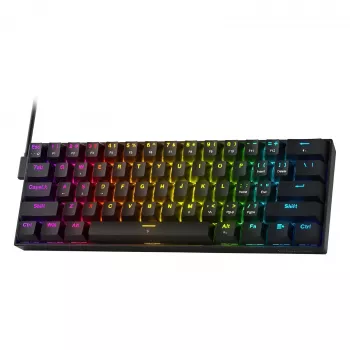
- Rapid-Trigger 60% Gaming Keyboard with Magnetic Switches — compact 60% layout with magnetic-switch sensing and rapid-trigger input behavior. $45.51 (USD), in stock.
- Electric Adjustable Height Standing Desk with Dual Drawers and Mobile Casters — a flexible foundation for dialing in keyboard height, mouse position, and posture during long sessions. $518.32 (USD), in stock.
FAQ
Do magnetic-switch keyboards feel different from traditional mechanical switches?
They often feel smoother and more linear because actuation is sensed by travel distance rather than a contact click. Sound and feel still depend heavily on the case, keycaps, and stabilizers, so two magnetic boards can feel surprisingly different.
Is rapid trigger only useful for FPS games?
It’s most noticeable in FPS movement (strafing and counter-strafing) and anywhere you’re tapping rapidly, but it can also benefit rhythm games and other titles that reward fast re-press timing. For pure typing, extremely fast settings may feel overly sensitive until tuned.
Will a 60% keyboard work for everyday tasks?
Yes, but it comes with a learning curve because arrow keys, function keys, and navigation commands are usually accessed through layers. If you rely on shortcuts and can adapt to Fn combos, it can work well; if you do heavy navigation work, a larger layout may be more convenient.













Leave a comment